Why Does My Cat Pee on My Bed? Check Urine Output First
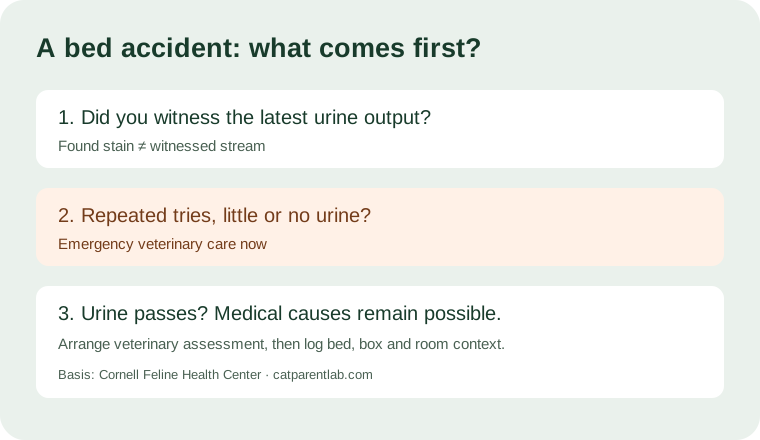
If your cat repeatedly tries to pee but passes only drops or none, seek emergency veterinary care now; passing urine still does not rule out a medical cause of bed accidents.
A blocked urethra is an emergency. For a cat still passing urine, arrange a veterinary assessment before treating the bed, litter, or bedroom as the explanation. Cornell: lower urinary tract disease · Cornell: house soiling
Two different bedroom stories, two different limits
| Report date and starting condition | What the household changed | What it observed—and what that cannot prove |
|---|---|---|
| January 11, 2025. A young cat in a two-cat home intermittently peed on the bed and couch after about three months of age. | After reported vet visits and unsuccessful litter, box, cleaning, and placement trials, the household cleared upper shelves, added scratching surfaces and moved a cat tree into the bedroom. | The owner reported a long stretch without another accident. The sequence cannot isolate which change mattered, or establish a diagnosis. Dated household account |
| June 14, 2026. A four-year-old cat kept urinating on the bed after a urinary problem was treated and a later test was reported clear. The owner reported a return to almost daily bed accidents. | Enzyme cleaning, a plastic bed cover and putting food on the bed had not stopped it. The owner then arranged professional mattress cleaning, added a larger box beside the bed, uncovered the old box, and also tried a diffuser, a calming collar, more attention and a mattress protector. | The owner reported eleven days without a bed accident after that group of changes. The changes happened together, so the report cannot identify which one mattered or prove why the cat used the bed. Dated household account |
In the first home, litter and cleaning trials preceded a change to bedroom space; in the second, cleaning and bed-cover trials failed before several changes were made together. Both owners reported fewer accidents afterward, but neither timeline isolates a cause. The second cat's earlier urinary treatment is also a reason not to treat a later clear test as a general rule for other cats.
What to record before changing the bedroom
Write down the last urine stream you actually saw, whether the latest box visits produced drops, a usual amount, or an unknown amount, and whether the bed spot was witnessed or only found later. Record the date and place of each incident separately. A stain's size does not establish what happened on an unseen box visit; that is an inference from the difference between a found stain and a witnessed output.
After veterinary assessment, compare the bed event with access to the box and the bedroom: which doors were open, where the box was, and whether another cat occupied the bed or its route. Cornell lists medical conditions, box aversion, and surface preference as different possible contributors; a bed location alone selects none of them. Cornell's house-soiling guidance
For a male cat whose urine output is uncertain, use the male-cat urine-output check. For accidents on several surfaces, use the general outside-box guide.
Video: check output before the bed
Pet health disclaimer
This page is general information, not a veterinary diagnosis or treatment plan. Repeated attempts with little or no urine need immediate veterinary care. Contact your veterinarian about a new bed accident even if you witnessed urine pass.
By CatParentLab