Walnut Cat Litter: Formats, Cleanup, and Dated Prices
Walnut cat litter is made from ground walnut shells and is sold as clumping granules and non-clumping pellets. Choose the format that fits the cleanup routine your cat already accepts, then judge dust, tracking, odor, and cost from your own box—not from a material label.
These formats are not interchangeable: clumping litter is scooped as clumps, while non-clumping pellets need their own removal and mixing routine. Dated household reports below show varied results; the price table is a separate snapshot of four seller listings checked October 24, 2026.
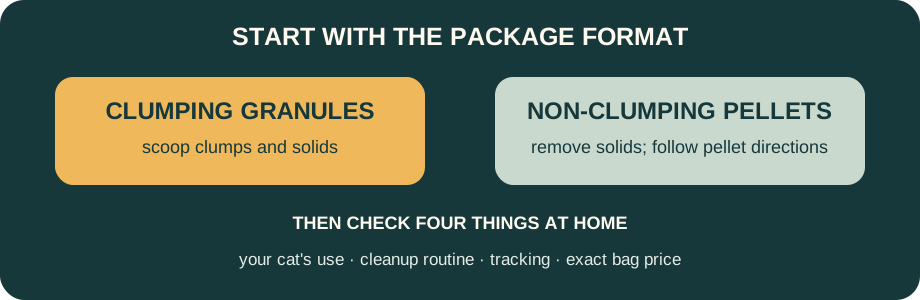
Choose the walnut format before comparing bags
| Package format | Routine to expect | Check before choosing |
|---|---|---|
| Clumping granules | Scoop clumps and solids; follow the exact bag directions. | How the granules track, how they scoop in your tool, and whether your cat uses the box consistently. |
| Non-clumping pellets | Remove solids; the manufacturer’s walnut-pellet directions also call for gently mixing used, moist material with dry litter. | Whether the pellet size, scoop, and box routine suit your setup. Do not apply clumping-litter expectations to this format. |
The brand directions cited here are specific to Naturally Fresh: it recommends a clean box with about three inches of litter, daily waste removal, and a gradual change that decreases the familiar litter over successive changes. Treat those as the maker’s instructions, not a promise that every cat will accept the change. If you use another walnut product, follow that product’s own label.
For a pellet routine and comparison across plant materials, see our pine litter format guide and paper litter cleanup guide. If you are comparing clumping alternatives, see the corn litter household checks and tofu litter scoop-route guide. For a broader non-clumping decision, see crystal versus clay litter.
Six dated household reports show different trade-offs
These are individual experiences, not controlled product tests. The dates identify when each account was recorded; they are not assumed test-start dates. A result in one home does not predict how another cat or box will behave.
September 6, 2026 — automatic box and waste catch. One household using a sweeping litter box reported mold in the catch if it was not cleared every one or two days. That is one account tied to that device and maintenance interval; it does not establish that walnut litter generally molds.
September 6, 2026 — self-cleaning globe. A different household found one walnut formula very dusty and not firm-clumping enough for its globe, and moved to another material despite tracking from that alternative. This is a setup-specific fit report; check the automatic-box maker’s compatibility instructions before using any litter.
June 10, 2026 — long-term use with a digging cat. After more than six years with walnut litter, one household said a digging cat scattered granules that were carried into the bed. The tracking prompted a search for alternatives; the account does not compare mats or test a different granule size.
March 17, 2026 — two cats and three boxes. One household said walnut clumped adequately and was its most cost-effective of the natural materials it had tried, but odor control was poor. Its multiple boxes and regular full cleanings shaped the cost concern; this is not a price-per-month comparison.
July 26, 2023 — one long-haired cat. One owner found walnut less dusty than the clay used before and easy to scoop, with acceptable odor control in that home. The granules stuck to the cat’s fur and were carried around the house.
July 26, 2023 — two cats needing extra-large boxes. A separate household stopped using walnut because weekly full changes made it expensive, then switched to bulk pine pellets and daily wet-spot scooping. This account describes that household’s choice; it does not establish that pine costs less for every buyer.
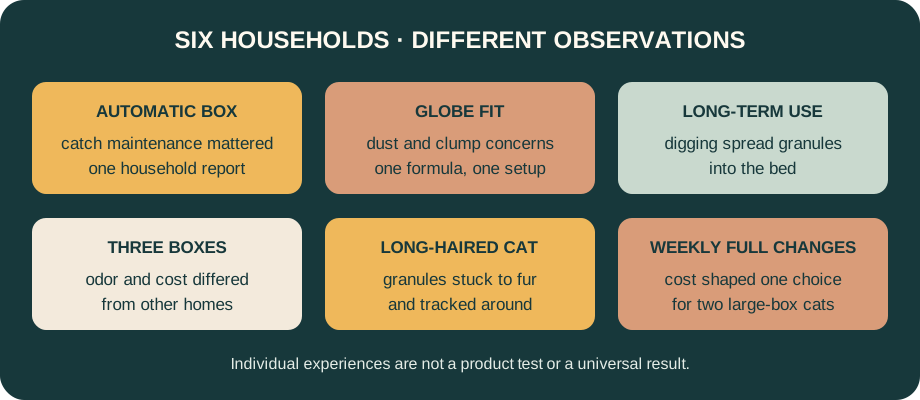
Use the reports as checks, not a verdict: watch the box after the change, look at where granules land, and note how the exact formula scoops in your setup. Keep the evidence narrow: these reports cannot prove a health effect, explain a new toileting change, or rank walnut against every other material.
Retailer listing snapshots, checked October 24, 2026
These are seller prices for the exact listings shown, not product tests or endorsements. The per-pound values are the seller’s displayed unit prices where provided; bag sizes and formulas differ. Tax, shipping, local availability, and later price changes are not included.
| Exact listing | Format and size | Buy-once listing | Displayed unit price |
|---|---|---|---|
| Naturally Fresh Unscented Clumping Walnut | Clumping, 26 lb | $29.99 | $1.16/lb |
| Naturally Fresh Multi-Cat Unscented Clumping Walnut | Clumping, 26 lb | $30.99 | $1.20/lb |
| Naturally Fresh Pellet Unscented Non-Clumping Walnut | Non-clumping pellets, 26 lb | $23.99 | $0.93/lb |
| Naturally Fresh Quick-Clumping Multi-Cat Walnut | Clumping, 14 lb | $20.99 | $1.50/lb |
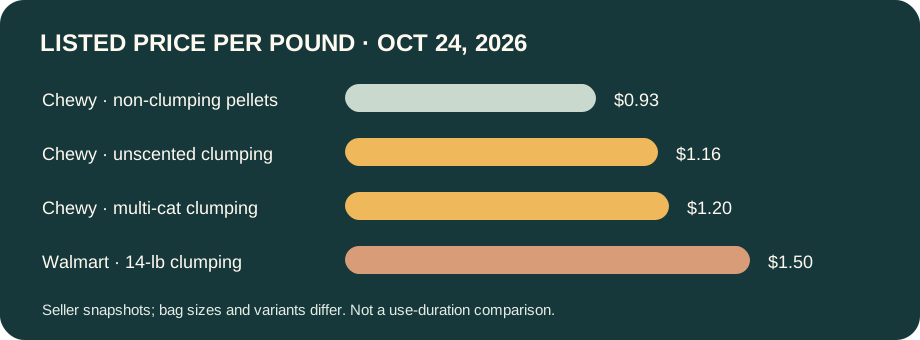
What the price table cannot tell you
- How long a bag will last: the listings show bag price and weight, not household use rate.
- Which variant works better: the seller rows identify different formulas and formats; the price comparison is not a performance test.
- Whether your cat will accept it: observe actual use during any change and keep a familiar option available rather than relying on an assumed schedule.
- Whether a device supports it: automatic boxes have model-specific requirements. Check the equipment maker’s instructions.
For a broader material comparison, see how crystal and clay litter differ.
Official product directions and retailer listings are identified as such; seller and maker claims are not independent testing. Household reports are individual observations, not medical advice.