Litter for Kittens: How to Choose a Type Your Kitten Uses
Start with the litter your kitten already uses, if you know it. If you are choosing from scratch, look for an unscented option and watch what your kitten repeatedly uses. There is no single material or age cutoff that settles every kitten’s situation. If your kitten chews or swallows litter, seems unwell, or suddenly stops using the tray, ask a veterinarian before experimenting. Keep a familiar tray available while comparing a new type.
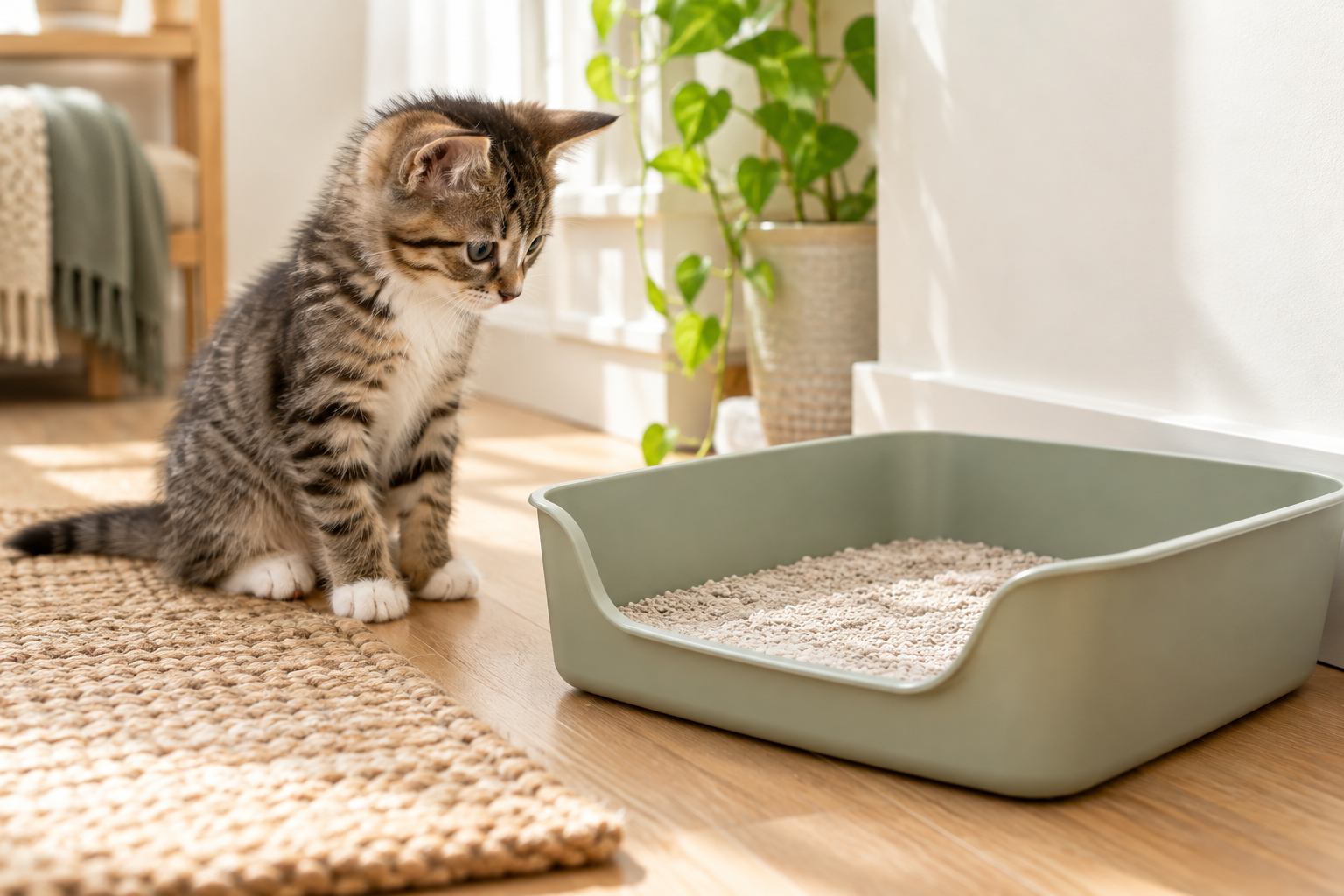
Different kittens, different litter outcomes
The situations below are not controlled product tests. They show why a label or one quick visit to a tray cannot predict what every kitten will do. None establishes that a material is safe or unsafe for all kittens.
Two seven-month littermates, two reactions
A household introduced a clumping litter to two kittens at about seven months. Both ate some of the new litter. One kitten then used it, while the other refused it; the household later changed to a different brand. These different reactions do not explain why the kittens responded differently or whether the replacement solved every concern. One sibling’s acceptance did not predict the other’s.
In another home, three pine products and one paper pellet were compared. The paper option seemed to smell worse, while the pine scent seemed to mask odor; a sifting tray was used. This was a household impression, not a measured odor comparison, and it does not tell us which material another kitten will use.
A different kitten struggled to stand comfortably on a particular pellet product. It is unclear whether the granule shape, tray setup, or something else mattered, so this situation cannot support a general rule about pellets.
A five-month-old treated a second tray as a toy
A recently adopted five-month-old kitten had used pine pellets in the previous home. The kitten stepped in stool or kept scratching after covering it, then got stool on a paw. To reduce that mess, a separate tray of clumping clay was placed beside the familiar one. The kitten pushed the new material around like a toy and scattered it. Clay reached the kitten’s face, and some was swallowed. Whether the kitten later accepted that texture or the original problem changed is unknown.
A ten-week-old was using the current litter, but the caregiver still felt unsure
A ten-week-old kitten used a crystal product without observed eating or unusual behavior, and a veterinarian had said it was okay for that kitten. Conflicting opinions still made the caregiver consider switching. No single alternative was agreed on. The mismatch between observed use and worry does not compare products or replace veterinary advice.
Three kittens changed their pattern after three weeks
Three kittens used their tray for their first three weeks, then began going outside it. Possible explanations included tray access, cleaning, size, and a health check. Setups varied: one four-cat home used one large tub and scooped twice daily; other households used multiple boxes. These were not compared under the same conditions. There was no confirmed cause or final fix in this example. When a pattern changes after reliable use, record the timeline and setup before assuming the litter brand is responsible.
Two shelter kittens stayed inconsistent through several trials
Two shelter kittens remained inconsistent after different litter and box sizes were tried, an attractant was used, and a possible health explanation was checked. The team considered separating the kittens to observe them individually and recreating a familiar texture. Because several things had changed, it remained unclear which factor mattered; no definite resolution was available. When circumstances allow, change one thing at a time so the result is easier to interpret.
The cases are not medical guidance. Do not copy a product choice from another household as a safety rule for your kitten.
Choose the first bag by what you can observe
Ask the previous caregiver what was in the tray and whether the kitten used it. That gives you a starting point. If the same litter is available and there is no reason to stop using it, keep it while the kitten settles in. Familiarity is not a guarantee, but it avoids combining a move with an unnecessary material change.
When comparing a new bag, check the ingredient list, fragrance, visible dust when poured, texture under small paws, and the package’s directions. Words such as “natural,” “premium,” or “kitten” do not tell you whether an individual kitten will use that product. Plant-based materials also differ in size, scent, and form.
Clumping or non-clumping litter for kittens?
Veterinary references do not all give the same starting advice for very young kittens. AAHA’s kitten checklist includes unscented clumping sand and/or the litter the kitten previously used. PetMD advises non-clumping litter for very young kittens just learning the tray and discusses a later transition. VCA describes clumping-style litter as preferred by most cats. These statements are not one universal age rule. If your kitten mouths litter, has swallowed it, or has a health concern, ask your veterinarian which product to use.
For kitten safe litter, do not treat a material category or package label as proof that ingestion is harmless. If repeated chewing or swallowing is happening, stop the product trial and get veterinary advice.
Compare the material, not the marketing label
Fine clay
May feel familiar to a kitten already using a fine-grained litter. Compare scent and dust, and follow your veterinarian’s advice if the kitten mouths it.
Pellets
Paper, wood, and plant-based products can feel very different from fine granules. A kitten may inspect, dig, or avoid a new texture; observe repeated use before deciding it has accepted it.
Crystal
Crystal litter has a distinct texture from sand-like products. If your kitten is using it and you have questions about age or ingestion, ask your veterinarian rather than relying on another household’s result.
Attractant blends
Kitten attract litter adds an attractant or kitten-oriented texture. It is still a product choice, not a diagnosis or a substitute for an accessible, clean tray.
Dr. Elsey’s Kitten Attract is one named example. Its manufacturer lists natural clay and herbs, describes it as hard-clumping, and labels it for kittens from eight weeks to one year. Those are manufacturer statements, not an independent test or a universal age recommendation. Check the current package and ask your veterinarian if your kitten is very young or eats litter.
A litter trial that lets you read the result
Use a small trial only when you have a reason to compare. Keep notes so a short burst of play, one missed visit, or a simultaneous change in the tray does not get mistaken for a clear preference.
- Keep the familiar litter available. If practical, put a candidate in a separate clean tray instead of replacing the accepted material all at once.
- Change one thing at a time. Keep the tray location and surrounding setup steady where possible.
- Record what happens over repeated visits: entering, digging, eliminating, covering, returning, avoiding, or mouthing the litter. A single sniff or play session does not settle the result.
- If the kitten avoids the new option, restore the familiar option. Do not remove the accepted litter to force a choice.
- If the kitten eats litter, strains, seems ill, or suddenly stops using the tray, pause the trial and contact a veterinarian.
Download the kitten litter trial log (CSV)
What litter is best for kittens?
The best cat litter for kittens is the one your kitten uses consistently and that fits the kitten’s age, behavior, and your veterinarian’s advice. If you do not know what the kitten used before, choose a clearly labeled product, keep another usable option available, and observe instead of making several changes at once. There is no one material that wins for every kitten.
Common questions
Should I choose unscented litter for a kitten?
Unscented litter is a reasonable starting point when selecting a new type, and AAHA’s kitten checklist specifically includes unscented clumping sand. If your kitten already uses a different litter comfortably, do not change abruptly without a reason.
Can I switch my kitten from non-clumping to clumping litter?
There is no single age cutoff here that fits every kitten. Check the product directions, consider whether the kitten mouths litter, and ask your veterinarian if you are unsure. Keep the accepted option available while introducing a change.
What if my kitten will not use the new litter?
Restore a familiar option and note what changed. Consider texture, scent, dust, and whether the box or room changed at the same time. If use changes suddenly or the kitten seems unwell, contact a veterinarian.
Does kitten attract litter fix litter-box problems?
No single product fixes every reason a kitten may avoid a tray. An attractant is one option to discuss, but sudden avoidance, illness, or litter eating calls for veterinary advice.
Bottom line: begin with the kitten’s familiar litter when possible. Compare a new type only when you have a reason, change one thing at a time, and ask your veterinarian about ingestion, sudden avoidance, or health concerns.
Sources
- AAHA, From the Guidelines: Kitten checklist — unscented clumping sand and/or prior litter; offer litter types to reveal preference.
- VCA Animal Hospitals, How to Litter Train Your Kitten — most cats prefer clumping-style litter; try other types if the kitten avoids the tray.
- PetMD, New Kitten Checklist — its advice for very young kittens and later clumping-litter transition.
- Dr. Elsey’s, Kitten Attract Litter — manufacturer’s listed age range, ingredients, and product description.
This guide compares litter choices; it does not diagnose or treat illness. Follow product directions and ask your veterinarian about ingestion, sudden avoidance, or health concerns.
For the separate question of teaching a kitten to use a litter box, see the kitten training guide.