Doctor Elsey’s Ultra Cat Litter: Check the Fit in Your Box
Doctor Elsey’s Ultra is unscented clumping clay; check how its clumps lift, what stays on the pan, and how dust, tracking, and odor behave in your setup.
The brand uses both “Dr. Elsey’s” and “Doctor Elsey” in product references; this page is about Ultra, not every formula sold under the name. The manufacturer describes Ultra as unscented clumping clay and makes dust, tracking, and odor claims. Those are the maker’s claims, not a guarantee for a particular box.
Compare the reported use sequences before choosing
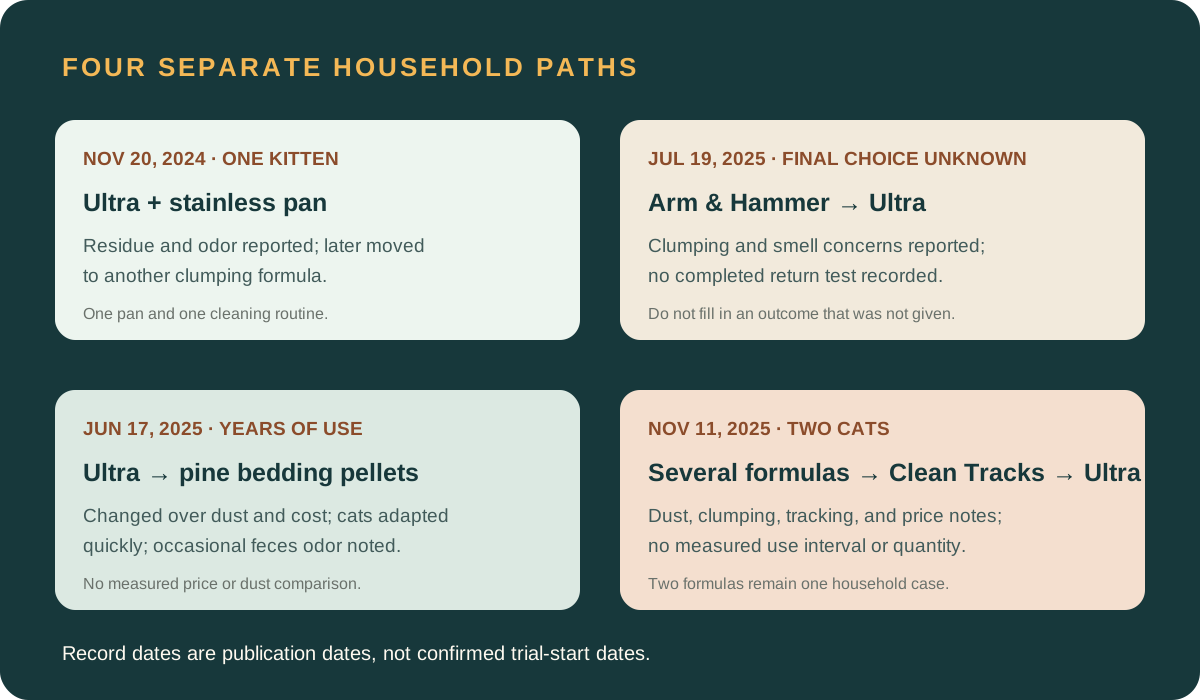
The dates below are the dates the written records were posted. They are not confirmed trial-start dates. Each row is one independent household experience; a later update by the same person remains part of that same experience.
| Record date | Starting conditions | What changed or was tried | Reported outcome | What the record cannot establish |
|---|---|---|---|---|
| Posted November 20, 2024; update posted July 19, 2025 | One six-month-old kitten; stainless-steel pan; once-daily cleaning and a full litter replacement about monthly, as reported. | The household tried baking soda and a litter deodorizer while using Ultra. | The person reported broken or weak clumps, litter sticking to the pan bottom and sides, residue, and odor within a week after a full change. A later update says they moved to another clumping formula. | One kitten and one stainless-steel pan do not show how Ultra behaves with another pan, depth, scoop, or cleaning pattern. The account does not isolate which condition caused the residue. |
| July 19, 2025 | A household had started with another clumping brand and later moved to Ultra after seeing recommendations. | They considered returning to the earlier brand after using Ultra. | They reported that it did not clump as hoped and smelled bad for them; the final choice was not recorded. | This is an unresolved comparison, not a completed switch-back test. No box material, cat count, duration, or measured odor level was recorded. |
| June 17, 2025 | A household had used Ultra for years and was tired of dust and cost. | They changed to pine bedding pellets in repurposed restaurant bus tubs. | They reported that the cats adapted quickly and mentioned occasional odor from feces. | The account does not give a measured dust level, amount used, price per pound, or a controlled cost comparison. It is one household’s move away from Ultra, not a product ranking. |
| November 11, 2025 | A two-cat household had tried several clay litters and a silica product before using two Dr. Elsey formulas in sequence. | They used Clean Tracks before Ultra and described pouring and box-emptying observations. | They reported little visible dust while pouring Ultra, good clumping, less tracking, and a higher price; they also said a complete box emptying was needed less often. | No purchase price, exact interval, litter consumption, or controlled comparison was supplied. Clean Tracks and Ultra were separate steps in one household sequence, not two independent cases. |
Check the same four things in your own setup
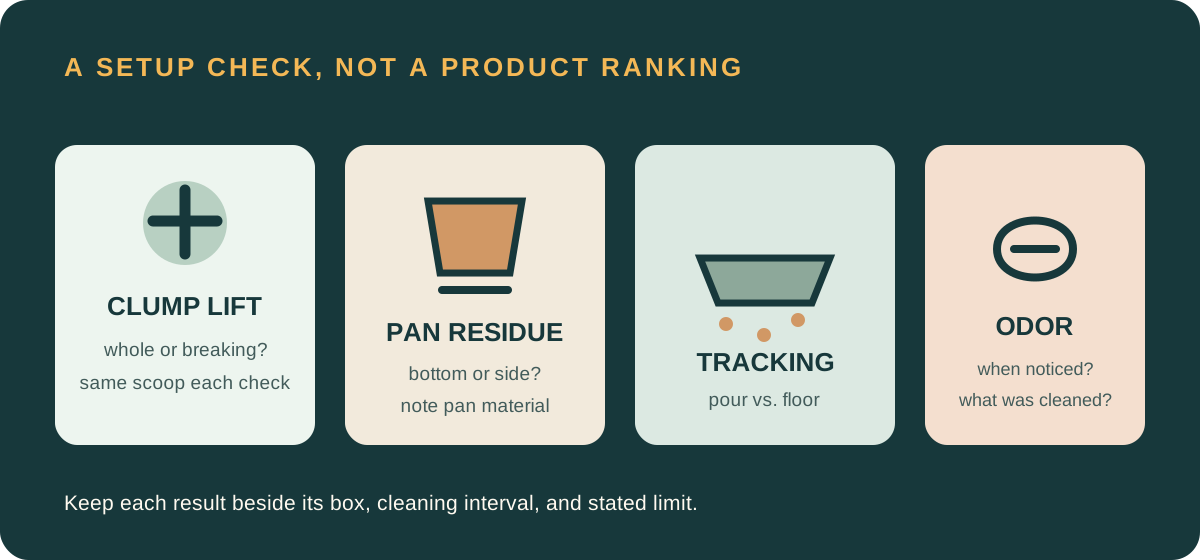
- Clump pickup: note whether a urine clump lifts in one piece with your scoop, or breaks and leaves pieces behind. Do not infer why from one observation.
- Pan residue: after scooping, note whether material is stuck to the bottom or sides. Record the pan material and the time since the last full change; this page has no controlled pan comparison.
- Dust and tracking: separate what you see while pouring from what you find outside the box later. One household reported little visible dust while pouring; another left Ultra because of dust. Neither observation measures airborne particles.
- Odor: record when you notice it and what was cleaned, without treating one household’s timing as a replacement schedule for yours.
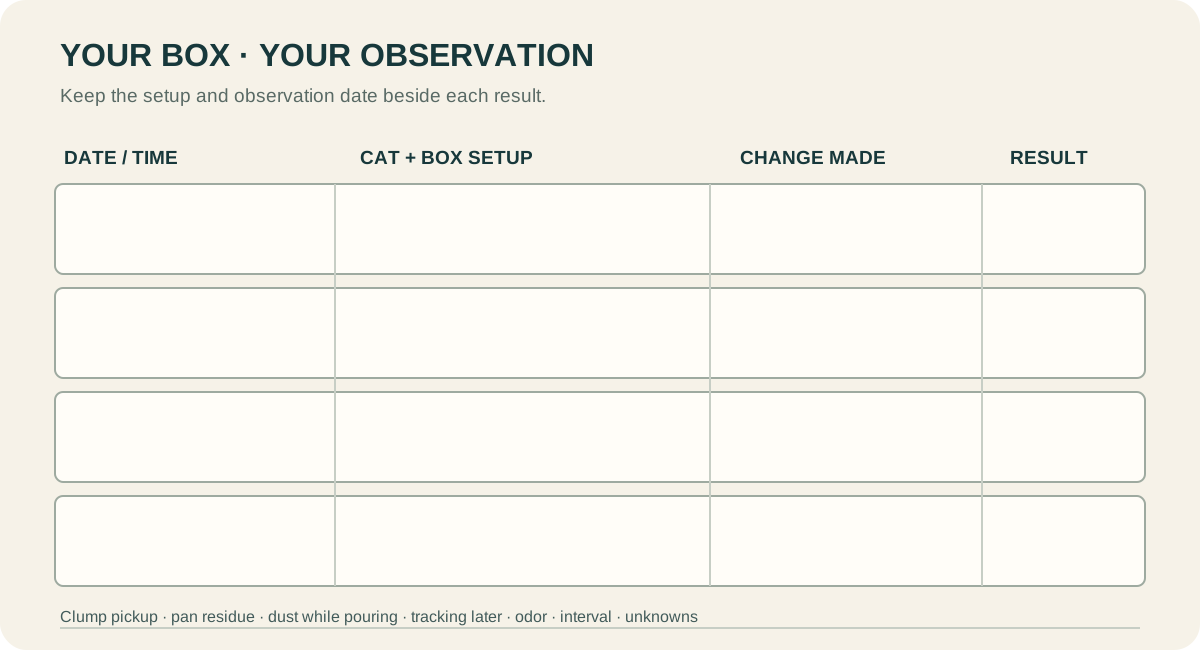
Keep the boundary attached to the result: these records can show that people using the same named litter described different clumping, residue, dust, tracking, odor, and cost experiences. They cannot tell you which factor caused a result, predict your cat’s response, or establish a medical effect.
What the product description does—and does not—say
The manufacturer identifies Ultra as unscented clumping clay and markets it for multi-cat homes and certain sifting or mechanical boxes. Check the instructions for your exact litter-box model before using any litter in it. A product-page compatibility statement is not a household test, and it does not settle how a particular scoop or pan will perform.
There is no single outcome across the four records: one stainless pan was reported to retain residue, one account did not record a final choice, one household left Ultra for pine pellets, and one two-cat household reported favorable observations after a multi-formula sequence. Treat those as separate paths rather than a vote for one formula.
For a wider look at non-clumping material and cleanup differences, see the crystal and clumping-clay comparison.