Best Cat Litter Mat: Choose One Your Cat Will Cross
The best cat litter mat is one your cat actually steps on and that you can clean without dreading the job. Start by watching the exit route: a mat cannot catch much if your cat jumps over it, lands beyond it, or carries litter farther on long fur. Then choose a surface that fits your cleanup routine. A deep trapping design may hold scatter but can be awkward to empty; a washable rug or towel may be easier to toss in the wash. No style works for every cat or floor plan.
Different homes, different mat outcomes
These are individual household experiences, not controlled comparisons. They show why a feature that helps one person can fail in another setup.
The easier-to-clean mat got jumped over
One household liked a new double-layer honeycomb mat because it was easier to clean than an older flexible mat whose holes held litter. The cat disliked the new surface and jumped over it, even though she had tolerated the previous material. The easier cleanup did not matter when the cat avoided the mat.
Several specialty mats lost to a bath towel
After trying several specialty mats, one household found a simple bath towel more useful: it could go straight into the wash. Another household reported the opposite trade-off with a washable waterproof fabric mat that worked well for them. Washability helped both routines, but neither account establishes a universal winner.
A large catcher did not stop a long-haired cat
One long-haired cat still carried litter beyond a large floor catcher. Trimming the fur under the cat did not solve that household’s problem because litter also stuck to the paws. A separate owner said trimming paw tufts made a noticeable difference at home. These are different personal results, not a grooming recommendation for every cat.
A mat that caught litter still created a cleanup problem
One household said mats gathered most of the litter, but the cats began peeing on them and emptying loose litter without spilling became difficult. Another owner preferred a rubber-strand surface that could be vacuumed and rinsed. The useful question was not just what trapped scatter, but what stayed manageable after a messy day.
The first paw-shaped mat was too small; the deeper one filled up
One owner found a conventional paw-shaped mat ineffective and too small, then reported better trapping from a double-layer design. A cat in the same home sometimes kicked litter everywhere; when the holes filled, the owner had to pour the contents back or sweep again. A different design changed the cleanup, but did not remove the need to match size and routine.
Each case preserves the reported result and its limits. They do not establish that any named material, size, or litter type will work for another cat.
Choose by the problem you can see
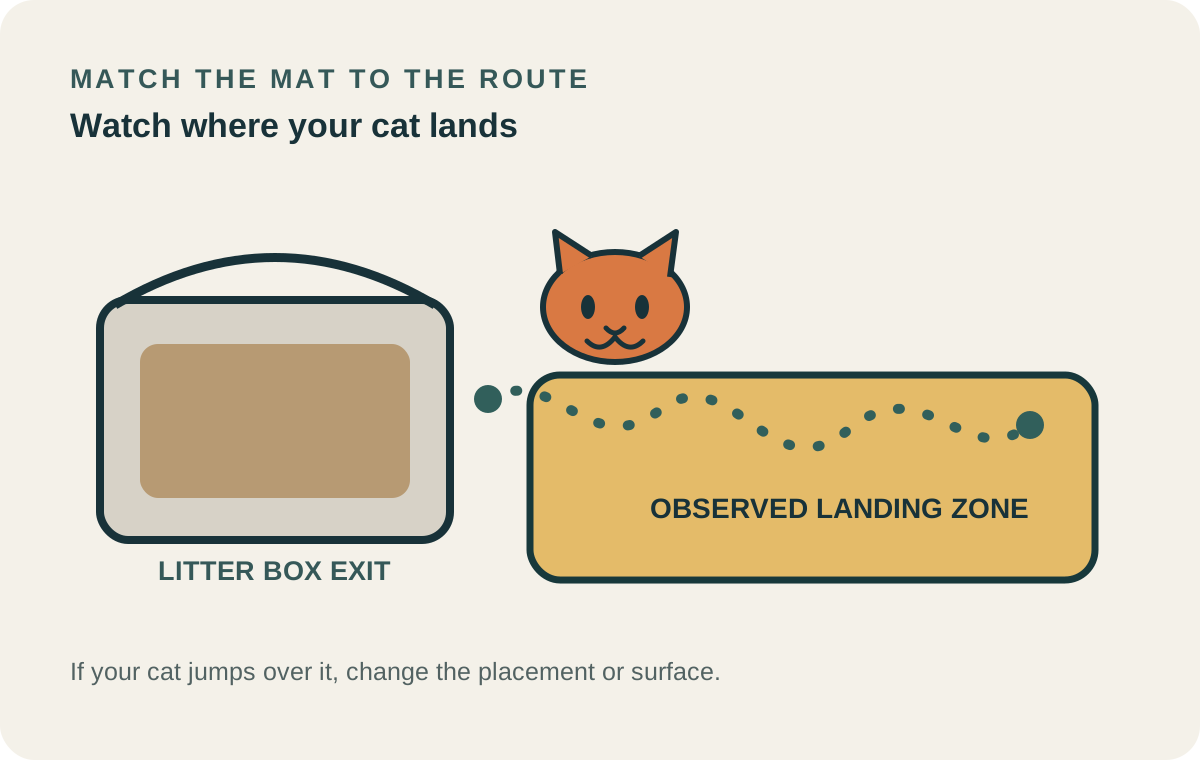
- Mark the landing area first. Watch a few ordinary exits. Notice whether your cat steps onto the mat, springs past it, turns sideways, or scatters litter before reaching it. Place the mat across the route the cat uses, not just neatly in front of the box.
- Match coverage to the footprint. If the first few steps land beyond the mat, try a longer or wider surface, or place a second washable layer where the cat actually walks. A bigger mat still will not catch litter carried farther on fur.
- Choose the cleanup you will keep doing. A deep or double-layer pocket can collect loose pieces, but ask whether you can open it and empty it over a bin. A flat rubber or textured surface may be easier to vacuum or rinse. A towel or rug can be simpler if laundry is easier than shaking a trap layer.
- Check how your cat responds. If your cat leaps over, paws at, or avoids a new texture, do not assume a more elaborate mat will fix it. Return to a familiar surface or test another texture while keeping the box usable.
- Think about the mess beyond dry litter. If the mat is likely to get wet or soiled, prioritize a surface you can clean fully and a backing that suits your floor. Do not keep a mat that becomes a repeated hygiene problem just because it traps dry litter.
Honeycomb, rubber, fabric, or a cat litter rug?
There is no material verdict shared by all of the households above. Double-layer pockets were described as easier for one person to empty and troublesome for another once full. A cat accepted one rubbery surface but rejected a new honeycomb one. Some owners preferred washable fabric, rubber strands, a towel, or an ordinary rug because the cleaning step fit their home. Treat texture and maintenance as a pair: the cat must cross it, and you must be able to reset it.
A cat litter rug can be a practical alternative when you would rather vacuum or launder a flat surface than empty a pocket. If you use a deep-pocket design, check how litter leaves the lower layer before buying. For fabric, check the care label and whether the item can be washed as often as your routine needs. Product descriptions cannot tell you whether your individual cat will walk across a surface.
When a large or extra large cat litter mat is worth considering
Look at the exit path and the room, not only the box width. A cat may land to one side, turn toward a doorway, or carry litter beyond the first few steps. Measure the clear floor area that can stay uncovered and compare that with where the cat actually goes. If the cat avoids the surface or the mat blocks a door, a smaller washable option in a better position may be more useful than an extra-large mat that is rarely crossed.
Choosing a litter robot mat
For a litter robot mat, observe where the cat steps after leaving the unit, then measure the clear floor area available there. Keep the mat out of the unit moving path and preserve the access and service space described in the model instructions.
Retailer listing snapshot checked October 4, 2026
These are six listings captured on the check date, not a like-for-like performance test. Prices and availability can change by location, seller, option, promotion, or checkout. Confirm the selected item and current details with the retailer.
| Retailer / item | Listed size | Displayed price | Observed |
|---|---|---|---|
| Chewy: DRYMATE Ridged Cat Litter Trapping Mat, Large | 20 × 28 in | $18.99 | October 4, 2026 |
| Target: up&up Drizzle Cat Litter Mat, Large | 23.75 × 35.35 × 0.25 in | $12.99 | October 4, 2026 |
| Walmart: Conlun Double Layer Honeycomb Cat Litter Mat | 24 × 18 in | $9.99 | October 4, 2026 |
| Petco: So Phresh Rectangle Shape Cat Litter Trapper Mat, Large | 35 × 23.5 in | $22.99 | October 4, 2026 |
| Wayfair: DGS Pet Products Fabric Litter Mat | 35 × 26 × 2 in | $37.82 | October 4, 2026 |
| The Home Depot: Ottomanson Multipurpose Kitty Litter Mat | 30 × 15 in | $14.38 | October 4, 2026 |
Names, sizes, and displayed prices were carried over from the prior dated retailer snapshot. They are listing details, not hands-on product results.
Is a waterproof cat litter mat a better choice?
A waterproof surface may help protect the floor only when liquid stays within its usable area. Check the backing, edges, and care directions; waterproof does not tell you whether the texture suits your cat or whether the mat is easy to clean after a mess.
Common questions
Do cat litter mats actually work?
They can collect some tracked litter in some homes, but results varied: some owners still swept daily or found that cats jumped over the mat. Watch the landing path and the cleanup burden before deciding a mat has solved the problem.
What if my cat jumps over the litter mat?
Try a familiar texture or reposition the mat across the landing route. If the cat still avoids it, use an easy-to-wash rug or other floor covering that fits the space rather than relying on a surface the cat will not cross.
Is a honeycomb litter mat better than a flat mat?
Not for every household. A pocket design may gather loose litter, but some owners found it cumbersome to empty or clean. Compare the emptying step with vacuuming or laundering a flatter surface.
What size cat litter mat should I get?
Choose coverage for the cat’s actual exit and walking path, then check the floor area you can keep clear. If litter still appears far beyond the mat, fur or paw carry may be part of the pattern; increasing mat size alone may not fix it.
Can I use a bath mat or towel instead?
One household preferred a towel because it could be washed after use; other owners used rugs or textured surfaces. Check that the material stays in place, fits your floor, and can be cleaned in the way you need.
Bottom line: start with the route your cat takes, then choose a mat that your cat will cross and you can clean. If the first setup fails, change placement or surface based on what you observed instead of assuming every mat works the same way.
For the separate question of choosing litter with less tracking, see Low Tracking Cat Litter.
For litter-mat placement around the box, see Where to Put a Litter Box.